21-Day Body Cleanse Program: Schedule, Foods, and Checklist
A 21-day body cleanse program: week-by-week schedule, foods to eat, a checklist, and common pitfalls.
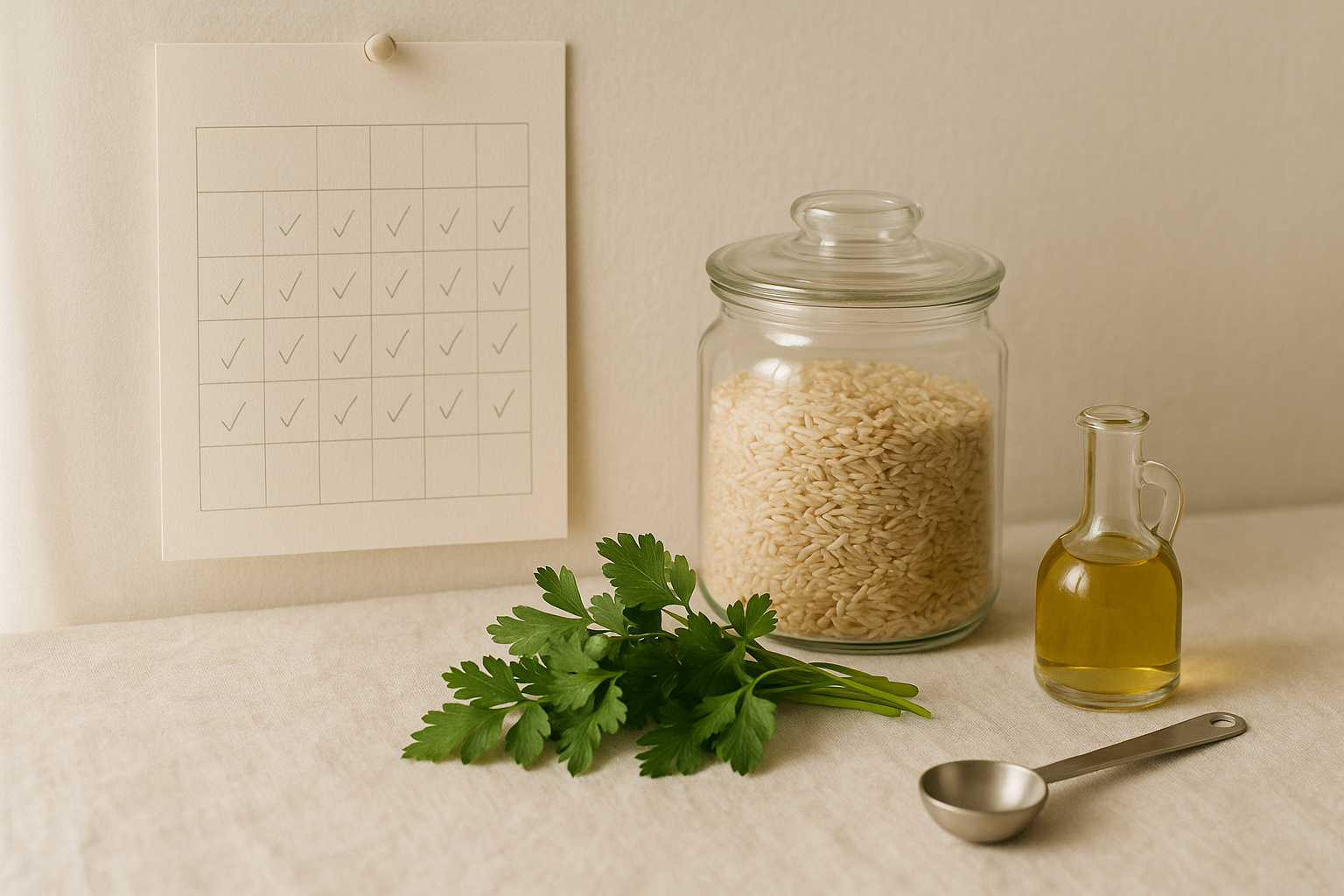
What Is a Cleansing Program and Why 21 Days?
In a medical sense, "cleansing" means supporting the body's natural detoxification systems: the liver, kidneys, lymphatic system, and intestines. These systems work around the clock and normally cope on their own. Problems arise when the load exceeds their capacity: metabolic byproducts accumulate, bile acids are processed more slowly, and the gut microbiota shifts toward opportunistic forms.
Why 21 days rather than three days or three months? It's a question of physiology. Enterocytes — the cells lining the intestinal mucosa — renew themselves approximately every 5–7 days [1]. Hepatocytes restore their functional reserve within 2–3 weeks when the load is reduced. The gut microbial community begins to shift sustainably in response to dietary changes after approximately 14–21 days [2]. Three weeks is the minimum biologically justified timeframe for talking about adaptation, rather than just a short-term stress response.
One common misconception deserves to be addressed upfront. A cleansing program does not "flush out toxins" in a literal sense — that physiological term does not exist. What it does is create conditions under which the detoxification organs work more efficiently. The distinction matters: we are not extracting imaginary substances; we are reducing the load and strengthening normal function.
Three Phases: How the Program Is Structured
Phase 1 (Days 1–7): Preparation
The main goal of the first week is to avoid causing harm through abrupt change. Most unpleasant reactions during cleanse programs — headaches, fatigue, irritability — arise precisely when the transition happens too quickly. The liver begins mobilizing fat-soluble metabolites faster than the intestines can eliminate them, and the person feels worse than before they started.
Week 1 diet: gradually eliminate ultra-processed foods, fast food, and alcohol. Increase the share of vegetables and legumes — sources of dietary fiber. Drink 30–35 ml of water per kilogram of body weight. This simple change alone improves intestinal transit.
Support: gentle sorbents work well during the preparation phase. Zosterin-Ultra 30% — a pectin-based product from zostera seagrass — binds heavy metals and bile acids in the intestinal lumen without being absorbed itself [3]. Take it 30–40 minutes before meals, separately from other supplements and medications.
Week 1 checklist:
- [ ] Eliminate alcohol completely [ ] Exclude or drastically reduce sugar and refined flour [ ] Add 400–500 g of non-starchy vegetables daily [ ] Drink at least 1.5–2 L of water per day [ ] Establish a sleep schedule (no later than 11 pm) [ ] Start a sorbent if indicated
Phase 2 (Days 8–14): Active Cleansing
The second week is the core of the program. The liver is actively processing what has accumulated; the intestines are working more intensively. Two areas need support simultaneously: liver protection and normalization of intestinal permeability.
Week 2 diet: the diet remains predominantly plant-based, but quality protein is added — eggs, fish, legumes. Protein is needed to synthesize glutathione — the liver's primary antioxidant. A protein deficit during a cleanse paradoxically slows down liver enzyme activity.
Include bitter greens in your diet (arugula, chicory, dandelion leaves) — they stimulate bile secretion and support Phase I detoxification in hepatocytes. Beets are rich in betaine, which is involved in methylation — a critical Phase II detoxification process.
Gut support: at this stage, attention should be paid to the state of the mucosa. Enterosan — a product based on enterin (a protein from the small intestinal wall) — is traditionally used to restore the barrier function of intestinal epithelium. It is introduced into the program specifically in the second week, when the load on the mucosa is at its peak.
Antiparasitic aspect. If there is a history suggesting a parasitic burden — itching, sleep disturbances, intermittent abdominal pain — the second phase is a suitable time for a mild antiparasitic course. Stoparazit, based on herbal extracts (chamomile, tansy, cloves), creates an unfavorable environment for helminths without aggressively affecting the microbiota. Important: antiparasitic treatment for a suspected specific parasite should only be undertaken after laboratory diagnosis and under medical supervision.
Week 2 checklist:
- [ ] Protein with every main meal [ ] Bitter vegetables and beets 3–4 times a week [ ] Continue water intake [ ] Gut support (as indicated) [ ] Moderate physical activity — walking, not intense training [ ] Limit coffee to 1 cup per day
Phase 3 (Days 15–21): Restoration
The third week is the phase most often skipped, with people assuming "they've already done their part." That's a mistake. After an active detox phase, the gut microbiota remains in an unstable state, and the mucosa is vulnerable. Without a restorative phase, the improvements in well-being turn out to be temporary.
Week 3 diet: gradual expansion of the diet. Add fermented foods: high-quality live yogurt without additives, sauerkraut, kefir. This is not just a trend — research shows that oral consumption of diverse fermented foods restores alpha-diversity of the microbiota faster than single-strain probiotic supplements [2].
Fir tree cellular juice is another tool for the third week. Rich in organic acids and bioflavonoids, it supports antioxidant status and gently stimulates bile flow. It is taken a few teaspoons per day, added to water or fruit drink.
Consolidating results: the final week is important for forming habits that will persist after the program. If the 21 days end with a return to the previous diet, most of the work is undone within 10–14 days.
Week 3 checklist:
- [ ] Fermented foods daily [ ] Introduce one new vegetable or green that wasn't in the diet before [ ] Continue water intake [ ] Write down 2–3 habits to carry into the post-program diet [ ] Assess well-being: sleep, energy, digestion
Who Is the Program For — and Who Should Skip It
The program is designed for healthy adults who want to give their body seasonal support — most commonly in autumn or at the end of winter, when nutritional deficits tend to peak.
Indications:
- chronic fatigue without an organic cause digestive issues (bloating, irregular bowel movements) frequent respiratory infections (more than 4 episodes per year) recovery period after a course of antibiotics (at least 2 weeks after finishing) a desire to systematically revise eating habits
Contraindications and situations requiring medical supervision:
- pregnancy and breastfeeding acute inflammatory GI conditions (active peptic ulcer, Crohn's disease, ulcerative colitis) chronic liver or kidney disease oncological diagnoses use of anticoagulants, immunosuppressants, or insulin history of eating disorders age under 18
Common Mistakes and Red Flags
Mistake 1: Fasting or severely restricting calories. An energy deficit during detoxification slows down the liver's enzymatic systems. Minimum 1,400–1,600 kcal per day for women, 1,600–1,800 for men.
Mistake 2: Taking too many sorbents at once. Aggressive use of multiple sorbents can impair the absorption of fat-soluble vitamins (A, D, E, K) and certain medications. Choose one product and maintain a time gap before meals and other supplements.
Mistake 3: Ignoring water intake. Water is the primary transport medium for excreting water-soluble metabolites through the kidneys. Without sufficient fluid, any cleanse program operates at half capacity.
Mistake 4: Intense workouts during the first week. During the preparation phase, the body is adjusting. Heavy exercise creates additional oxidative stress and can amplify the transitional "crisis." Walking and gentle yoga are the optimal format.
Red flags — stop and see a doctor:
- severe abdominal or back pain dark urine or pale stools yellowing of the skin or whites of the eyes severe weakness or palpitations body temperature above 37.5°C (99.5°F)
What the Research Says
The scientific basis for "cleanse programs" is mixed. Systematic reviews from 2015–2020 note that short-term dietary protocols show moderate reductions in inflammatory markers (C-reactive protein, IL-6) and improvements in lipid profiles when dietary changes are real [4]. The problem is that most studies have small sample sizes and lack control groups.
According to a 2019 PubMed review, pectin sorbents demonstrate significant reductions in blood lead and cadmium levels during treatment courses in workers exposed to industrial pollution [3]. The mechanism is chelation of metal ions in the intestinal lumen before absorption.
The impact of fermented foods on the microbiota is one of the best-documented topics in this area. A randomized Stanford University study (2021) found that 10 weeks of consuming diverse fermented foods significantly increased gut microbiota diversity and reduced inflammatory markers — unlike a high-fiber diet, whose effect on the microbiota proved more individual [2].
Evidence on herbal antiparasitic complexes is limited: most studies were conducted in vitro or in animal models. Human clinical trials are scarce and methodologically weak. This does not mean they are ineffective — it means that strong claims cannot be made on the basis of available data.
How to Customize the Program for Your Situation
There is no ready-made universal formula — and that is an honest position. There are too many variables: age, gut health, dietary habits, antibiotic history, and chronic background conditions.
A basic minimum that works for most healthy adults:
- Phase 1: dietary correction + water intake + optional sorbent (e.g., Zosterin-Ultra 30% per instructions) Phase 2: add gut support (Enterosan), bitter vegetables, a protein-rich breakfast; antiparasitic course (Stoparazit) if indicated Phase 3: fermented foods, adaptogens, fir cellular juice for antioxidant support
If you want to figure out which elements are right for your specific situation — contact our store manager: we'll help you put together a plan suited to your current condition and the season, without overloading it with unnecessary items.
FAQ
Can the program be done twice a year? Yes, most nutritionists recommend seasonal courses — traditionally in autumn and spring. Allow at least 2–3 months between courses.
Is it necessary to run lab tests beforehand? For a thorough baseline assessment — ideally yes: a complete blood count and metabolic panel (ALT, AST, bilirubin, creatinine). This gives you a baseline picture that shows whether there are contraindications and lets you compare results afterward.
What should I do if I feel worse during the second week? A mild "crisis" (fatigue, headache in the first 2–3 days of Phase 2) is an acceptable transition reaction. If symptoms are severe or persist beyond three days — reduce the intensity of the program, return to Phase 1, and consult a doctor if necessary.
Can I exercise during the program? During the first two weeks — only moderate activity (walking, stretching, swimming). In the third week, you can gradually return to your regular workout routine.
What if I cannot fully change my diet? Even partial changes produce results. Start by removing alcohol and ultra-processed foods — that alone significantly reduces the burden on the liver. Perfection is not required here.
*This article is general reference information, not a substitute for medical consultation. If you have chronic conditions, are pregnant, or take medications — discuss any course with a specialist before starting.*
Sources
- Barker N. "Adult intestinal stem cells: critical drivers of epithelial homeostasis and regeneration." *Nature Reviews Molecular Cell Biology*, 2014. Wastyk H.C. et al. "Gut-microbiota-targeted diets modulate human immune status." *Cell*, 2021, 184(16):4137–4153. Zhao Z.Y. et al. "The role of modified citrus pectin as an effective chelator of lead in children hospitalized with toxic lead levels." *Alternative Therapies in Health and Medicine*, 2008. Klein A.V., Kiat H. "Detox diets for toxin elimination and weight management: a critical review of the evidence." *Journal of Human Nutrition and Dietetics*, 2015, 28(6):675–686.
Read more
- Cleansing
Removing Heavy Metals from the Body: What Actually Works
Removing heavy metals: what actually works (sorbents, chelators), and what is just marketing.
- Cleansing
Herbal Antiparasitic Program: Black Walnut, Wormwood, and Clove
Herbal antiparasitic program: black walnut, wormwood, clove — what each does, how to use them, and important limitations.
- Peptides

Khavinson Peptides: What They Are, How They Work, and Why They're So Popular
What bioregulatory peptides are, how they work, and who should take a closer look at Ovariamin, Thyreogen, Visiluten, and Suprefort.
- Peptides

Peptide Complexes for Men 40+: Testosterone, Prostate, and Recovery
Supporting testosterone, prostate health, and recovery in men over 40: Suprefort, Glandokort, BPC-157 — who it's right for and when to avoid it.
- Peptides
Thyreogen and the Thyroid Gland: Who It's For, How to Take It, Contraindications
When Thyreogen genuinely helps thyroid function, how to take it, and which contraindications must not be ignored.
- Detox
Intermittent Fasting and Body Cleansing: What the Data Says
What the data says about intermittent fasting and body cleansing: real mechanisms, realistic expectations, and risks.
- Detox
7-Day Detox Meal Plan: A Realistic Menu from Everyday Ingredients
A realistic 7-day nutrition plan to give your body a reset: daily menus, key foods, and what to watch out for.
- Detox

Cleansing and Chronic Stress: Why Detox Doesn't Work When Cortisol Is High
Why cleansing doesn't work against a backdrop of chronic stress, and how cortisol blocks the effect of any detox protocol.
- Cleansing
Removing Heavy Metals from the Body: What Actually Works
Removing heavy metals: what actually works (sorbents, chelators), and what is just marketing.
- Cleansing
Herbal Antiparasitic Program: Black Walnut, Wormwood, and Clove
Herbal antiparasitic program: black walnut, wormwood, clove — what each does, how to use them, and important limitations.
- Peptides
Khavinson Peptides: What They Are, How They Work, and Why They're So Popular
What bioregulatory peptides are, how they work, and who should take a closer look at Ovariamin, Thyreogen, Visiluten, and Suprefort.
- Peptides
Peptide Complexes for Men 40+: Testosterone, Prostate, and Recovery
Supporting testosterone, prostate health, and recovery in men over 40: Suprefort, Glandokort, BPC-157 — who it's right for and when to avoid it.
- Peptides
Thyreogen and the Thyroid Gland: Who It's For, How to Take It, Contraindications
When Thyreogen genuinely helps thyroid function, how to take it, and which contraindications must not be ignored.
- Detox
Intermittent Fasting and Body Cleansing: What the Data Says
What the data says about intermittent fasting and body cleansing: real mechanisms, realistic expectations, and risks.
- Detox
7-Day Detox Meal Plan: A Realistic Menu from Everyday Ingredients
A realistic 7-day nutrition plan to give your body a reset: daily menus, key foods, and what to watch out for.
- Detox
Cleansing and Chronic Stress: Why Detox Doesn't Work When Cortisol Is High
Why cleansing doesn't work against a backdrop of chronic stress, and how cortisol blocks the effect of any detox protocol.
- Cleansing
Removing Heavy Metals from the Body: What Actually Works
Removing heavy metals: what actually works (sorbents, chelators), and what is just marketing.
- Cleansing
Herbal Antiparasitic Program: Black Walnut, Wormwood, and Clove
Herbal antiparasitic program: black walnut, wormwood, clove — what each does, how to use them, and important limitations.
- Peptides
Khavinson Peptides: What They Are, How They Work, and Why They're So Popular
What bioregulatory peptides are, how they work, and who should take a closer look at Ovariamin, Thyreogen, Visiluten, and Suprefort.
- Peptides
Peptide Complexes for Men 40+: Testosterone, Prostate, and Recovery
Supporting testosterone, prostate health, and recovery in men over 40: Suprefort, Glandokort, BPC-157 — who it's right for and when to avoid it.
- Peptides
Thyreogen and the Thyroid Gland: Who It's For, How to Take It, Contraindications
When Thyreogen genuinely helps thyroid function, how to take it, and which contraindications must not be ignored.
- Detox
Intermittent Fasting and Body Cleansing: What the Data Says
What the data says about intermittent fasting and body cleansing: real mechanisms, realistic expectations, and risks.
- Detox
7-Day Detox Meal Plan: A Realistic Menu from Everyday Ingredients
A realistic 7-day nutrition plan to give your body a reset: daily menus, key foods, and what to watch out for.
- Detox
Cleansing and Chronic Stress: Why Detox Doesn't Work When Cortisol Is High
Why cleansing doesn't work against a backdrop of chronic stress, and how cortisol blocks the effect of any detox protocol.