7-Day Detox Meal Plan: A Realistic Menu from Everyday Ingredients
A realistic 7-day nutrition plan to give your body a reset: daily menus, key foods, and what to watch out for.
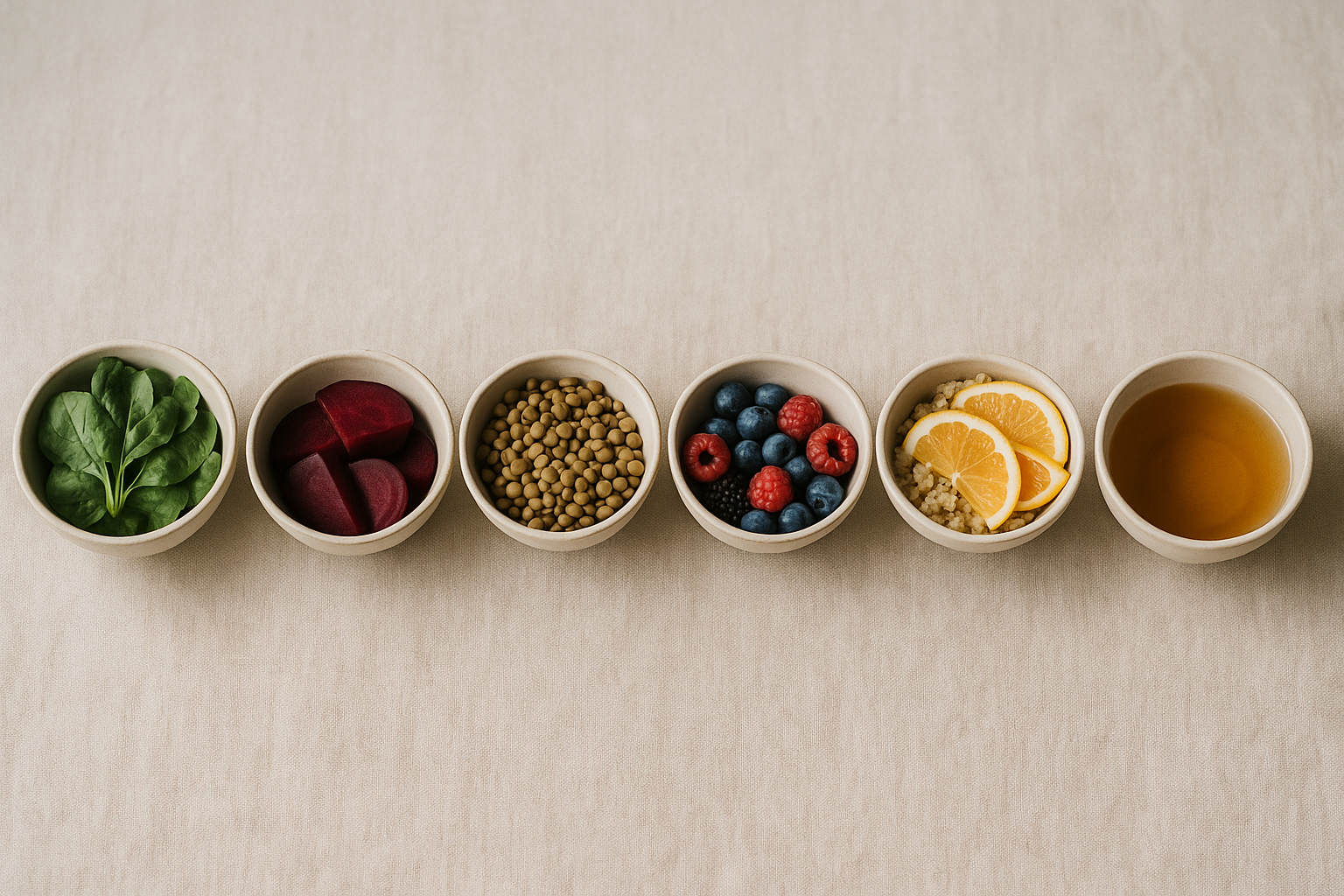
What Detoxification Is and Why Nutrition Supports It
The word "detox" is overloaded with marketing meanings, so it's worth clarifying from the outset. From a medical standpoint, detoxification is the continuous work of the liver, kidneys, intestines, and lymphatic system to neutralize and eliminate substances the body cannot or should not use. This work runs 24 hours a day, regardless of whether you're drinking green juice or not.
So why a special menu? Because the modern lifestyle creates constant background stress for the organs of elimination: excess processed food, alcohol, residual pesticides, medication loads, and physical inactivity. The liver operates in a state of permanent overload, and reducing some of that load through nutrition is a perfectly realistic goal.
Seven days is long enough to notice a difference: less bloating, more stable energy mid-day, and improved sleep quality for some people. At the same time, a week is short enough to stick to the plan without breaking down.
Diet Principles: What We Remove, What We Add
A detox diet operates on two simultaneous movements.
Remove:
- Alcohol (direct liver load through acetaldehyde metabolism) Refined sugar and products made from white flour Ultra-processed products — deli meats, chips, instant soups Coffee, or reduce to one cup without milk in the first half of the day Industrial sauces, ketchups, mayonnaise
Add and increase:
- Water up to 1.8–2.5 liters per day (depending on body weight and activity) Cruciferous vegetables: broccoli, cauliflower, white cabbage, arugula, radishes. They contain glucosinolates — precursors to compounds involved in the second phase of liver detoxification Leafy greens: spinach, chard, cilantro, parsley Fiber from legumes and whole grains for healthy bowel motility Bitter herbal teas: milk thistle, dandelion, mint (gentle support for bile secretion) Fermented foods: homemade sauerkraut, plain natural yogurt with no additives
7-Day Menu: Full Meal Plan
Portions are sized for an adult with average activity levels. Adjust to your hunger — a detox should not mean going hungry.
Day 1 — Gentle Start
Breakfast: Oatmeal cooked in water with a handful of blueberries (fresh or frozen), a tablespoon of flaxseed, half a green apple. Lunch: Cream of broccoli and celeriac soup made with vegetable broth. A slice of whole-grain bread. Dinner: Baked chicken breast (150 g) with arugula, cucumber, and lemon juice. Snack: A small handful of walnuts + herbal tea.
Day 2 — Fiber Focus
Breakfast: Buckwheat porridge cooked in water with plain natural yogurt, sliced banana. Lunch: Lentil soup with carrot, onion, and turmeric. Fresh cucumber and radishes on the side. Dinner: Poached white fish (cod, pollock, or pike perch — 150–180 g), sautéed spinach with garlic, half a cup of brown rice. Snack: An apple + a handful of pumpkin seeds.
Day 3 — The Green Day
Breakfast: Smoothie: a large handful of spinach, a green apple, half an avocado, a piece of ginger, water or unsweetened coconut water. Lunch: Salad of cooked beans, sliced celery, parsley, and tomato. Dressing: olive oil + apple cider vinegar + a pinch of salt. Dinner: Unsalted chicken broth, poached chicken breast, steamed cauliflower. Snack: Celery sticks with a teaspoon of unsweetened almond butter.
Day 4 — Midway Point
By this day some people experience mild fatigue or a headache — a normal response to the reduction in caffeine and sugar. Drink water, don't skip meals.
Breakfast: 2 soft-boiled eggs, 1 slice of whole-grain bread, avocado, fresh herbs. Lunch: Lentil soup with tomatoes and paprika, a handful of sauerkraut as a side. Dinner: Baked salmon (150 g) with lemon and dill, celeriac puree. Snack: Plain yogurt with a spoonful of chia seeds.
Day 5 — Cleansing Through Bitterness
Bitter foods are traditionally used in naturopathy to stimulate bile secretion: chicory, arugula, dandelion, grapefruit. This connection is supported by a number of observational studies.
Breakfast: Quinoa porridge with a handful of blueberries, a tablespoon of flaxseed oil. Lunch: Salad of arugula, grapefruit, poached chicken breast, and olive oil. Dinner: Braised eggplant with tomatoes and garlic, half a cup of brown rice. Snack: Chicory drink (caffeine-free) with unsweetened plant-based milk.
Day 6 — Light Unloading
Breakfast: Vegetable smoothie: carrot, small beet, apple, lemon juice, ginger. Lunch: Pumpkin cream soup with coconut milk and turmeric, topped with pumpkin seeds. Dinner: Steamed vegetables (broccoli, carrots, green beans) + a piece of poached white fish. Snack: A handful of almonds, chamomile tea.
Day 7 — Gentle Exit
Breakfast: Oatmeal with pear, cinnamon, and a spoonful of coconut oil. Lunch: Vegetable borscht (no meat), a slice of whole-grain bread with a thin spread of butter. Dinner: Grilled chicken breast, bulgur tabbouleh with tomatoes and parsley. Snack: Plain yogurt, a few walnuts.
Who This Is For and Who Should Hold Off
Suitable for:
- Healthy adults who want to give their body a break from processed food People coming off a period of excess alcohol and heavy meals Those who want to reset their eating habits — a detox week as an entry point into a more balanced diet
Requires caution or prior consultation:
- Pregnancy and breastfeeding — any dietary restriction should be discussed with an OB-GYN Diabetes — sudden changes in dietary carbohydrates can affect blood glucose levels Kidney disease — increased water intake and some vegetables (oxalates in spinach) may need monitoring Anticoagulant use — vitamin K from leafy greens can affect the metabolism of certain medications History of eating disorders — restrictive diets are generally not recommended
Common Mistakes and Red Flags
Mistake 1: Too few calories. A detox is not a fast. If you're eating fewer than 1,200–1,400 kcal, your body perceives it as stress, not rest. Pay attention to satiety.
Mistake 2: "Detox juices" instead of whole food. Juices lack fiber, and fiber is precisely what binds and removes some toxic compounds from the intestines. Whole foods are more effective.
Mistake 3: An abrupt exit. Going straight back to your old diet after seven days wastes the effect. Gradually reintroduce "regular" foods over two to three days.
Red flags — when to stop and see a doctor:
- Severe weakness or dizziness that doesn't resolve after eating Nausea or pain in the upper right abdomen Edema, especially alongside increased water intake Sleep disturbances worse than usual (mild disruption in the first few days is acceptable)
What the Research Says
There are few direct randomized studies of seven-day detox diets specifically — they are difficult to standardize. However, individual components are well studied.
According to reviews in the *Journal of Human Nutrition and Dietetics*, short-term diets eliminating ultra-processed foods and alcohol consistently reduce inflammation markers in adults without chronic disease [1].
Glucosinolates from cruciferous vegetables — sulforaphane and indole-3-carbinol — are being studied as supports for the second phase of liver detoxification. Cell culture studies show increased activity of conjugating enzymes (glutathione S-transferases), though extrapolating these findings to living humans requires caution [2].
Fiber from legumes and whole grains accelerates transit through the intestines and reduces the time potentially harmful compounds are in contact with the mucosa — a well-documented mechanism [3].
Increased water intake supports renal clearance — a basic fact of nephrology that requires no further citations.
How to Continue After the Week
Seven days on a detox diet is not the goal in itself — it's a tool for switching gears. If you feel noticeably better afterward, that's a signal: some of the foods you removed were creating more noise than you realized.
A good next step is to reintroduce "borderline" foods one at a time over two or three days and observe your reaction. Bringing back coffee, dairy, or gluten — one at a time, with a wellness journal — gives a more accurate picture than any lab test.
If you want to look more deeply at the underlying load — liver function, intestinal barrier, detoxification pathways — write to our store manager and we'll help you navigate the right protocols.
FAQ
Can I exercise during this week? Gentle movement — walks, yoga, stretching — is welcome: it supports lymphatic flow and gut motility. Intensive strength training is best postponed until after, especially if you've reduced calories.
Can I have coffee? For the first two or three days, it's ideal to cut it out or limit yourself to one americano without milk. After that, go by how you feel. Sudden caffeine withdrawal causes headaches for some people — a normal response, not a pathology.
What if I slip up for one day? Continue from the next morning as if nothing happened. One day doesn't negate the week, and the "all or nothing" mindset is the biggest enemy of any dietary change.
How noticeable are the results in 7 days? It depends on your starting point. People whose usual diet contains a lot of processed food often notice reduced bloating and improved energy by day 3–4. Those who already eat a balanced diet will see less dramatic changes — which is logical.
Do I need supplements or additional products? The diet itself doesn't require anything extra. If you want to add liver or gut support, that's a separate question worth discussing with a specialist based on your individual history.
*This article is general information and not a substitute for medical advice. If you have chronic conditions, are pregnant, or are taking medications — consult a specialist before making any changes to your diet.*
Sources
- Phillips C.M. et al. "Dietary patterns and inflammation: A systematic review of clinical trials" // *Journal of Human Nutrition and Dietetics*, 2019. Fahey J.W., Zhang Y., Talalay P. "Broccoli sprouts: an exceptionally rich source of inducers of enzymes that protect against chemical carcinogens" // *PNAS*, 1997. Translation of mechanisms to clinical practice: Mayo Clinic, Integrative Medicine review, 2022. Reynolds A. et al. "Carbohydrate quality and human health: a series of systematic reviews and meta-analyses" // *The Lancet*, 2019.
Read more
- Detox

Cleansing and Chronic Stress: Why Detox Doesn't Work When Cortisol Is High
Why cleansing doesn't work against a backdrop of chronic stress, and how cortisol blocks the effect of any detox protocol.
- Cleansing
21-Day Body Cleanse Program: Schedule, Foods, and Checklist
A 21-day body cleanse program: week-by-week schedule, foods to eat, a checklist, and common pitfalls.
- Cleansing
Removing Heavy Metals from the Body: What Actually Works
Removing heavy metals: what actually works (sorbents, chelators), and what is just marketing.
- Cleansing
Herbal Antiparasitic Program: Black Walnut, Wormwood, and Clove
Herbal antiparasitic program: black walnut, wormwood, clove — what each does, how to use them, and important limitations.
- Peptides
Khavinson Peptides: What They Are, How They Work, and Why They're So Popular
What bioregulatory peptides are, how they work, and who should take a closer look at Ovariamin, Thyreogen, Visiluten, and Suprefort.
- Peptides

Peptide Complexes for Men 40+: Testosterone, Prostate, and Recovery
Supporting testosterone, prostate health, and recovery in men over 40: Suprefort, Glandokort, BPC-157 — who it's right for and when to avoid it.
- Peptides
Thyreogen and the Thyroid Gland: Who It's For, How to Take It, Contraindications
When Thyreogen genuinely helps thyroid function, how to take it, and which contraindications must not be ignored.
- Detox
Intermittent Fasting and Body Cleansing: What the Data Says
What the data says about intermittent fasting and body cleansing: real mechanisms, realistic expectations, and risks.
- Detox
Cleansing and Chronic Stress: Why Detox Doesn't Work When Cortisol Is High
Why cleansing doesn't work against a backdrop of chronic stress, and how cortisol blocks the effect of any detox protocol.
- Cleansing
21-Day Body Cleanse Program: Schedule, Foods, and Checklist
A 21-day body cleanse program: week-by-week schedule, foods to eat, a checklist, and common pitfalls.
- Cleansing
Removing Heavy Metals from the Body: What Actually Works
Removing heavy metals: what actually works (sorbents, chelators), and what is just marketing.
- Cleansing
Herbal Antiparasitic Program: Black Walnut, Wormwood, and Clove
Herbal antiparasitic program: black walnut, wormwood, clove — what each does, how to use them, and important limitations.
- Peptides
Khavinson Peptides: What They Are, How They Work, and Why They're So Popular
What bioregulatory peptides are, how they work, and who should take a closer look at Ovariamin, Thyreogen, Visiluten, and Suprefort.
- Peptides
Peptide Complexes for Men 40+: Testosterone, Prostate, and Recovery
Supporting testosterone, prostate health, and recovery in men over 40: Suprefort, Glandokort, BPC-157 — who it's right for and when to avoid it.
- Peptides
Thyreogen and the Thyroid Gland: Who It's For, How to Take It, Contraindications
When Thyreogen genuinely helps thyroid function, how to take it, and which contraindications must not be ignored.
- Detox
Intermittent Fasting and Body Cleansing: What the Data Says
What the data says about intermittent fasting and body cleansing: real mechanisms, realistic expectations, and risks.
- Detox
Cleansing and Chronic Stress: Why Detox Doesn't Work When Cortisol Is High
Why cleansing doesn't work against a backdrop of chronic stress, and how cortisol blocks the effect of any detox protocol.
- Cleansing
21-Day Body Cleanse Program: Schedule, Foods, and Checklist
A 21-day body cleanse program: week-by-week schedule, foods to eat, a checklist, and common pitfalls.
- Cleansing
Removing Heavy Metals from the Body: What Actually Works
Removing heavy metals: what actually works (sorbents, chelators), and what is just marketing.
- Cleansing
Herbal Antiparasitic Program: Black Walnut, Wormwood, and Clove
Herbal antiparasitic program: black walnut, wormwood, clove — what each does, how to use them, and important limitations.
- Peptides
Khavinson Peptides: What They Are, How They Work, and Why They're So Popular
What bioregulatory peptides are, how they work, and who should take a closer look at Ovariamin, Thyreogen, Visiluten, and Suprefort.
- Peptides
Peptide Complexes for Men 40+: Testosterone, Prostate, and Recovery
Supporting testosterone, prostate health, and recovery in men over 40: Suprefort, Glandokort, BPC-157 — who it's right for and when to avoid it.
- Peptides
Thyreogen and the Thyroid Gland: Who It's For, How to Take It, Contraindications
When Thyreogen genuinely helps thyroid function, how to take it, and which contraindications must not be ignored.
- Detox
Intermittent Fasting and Body Cleansing: What the Data Says
What the data says about intermittent fasting and body cleansing: real mechanisms, realistic expectations, and risks.