Herbal Antiparasitic Program: Black Walnut, Wormwood, and Clove
Herbal antiparasitic program: black walnut, wormwood, clove — what each does, how to use them, and important limitations.
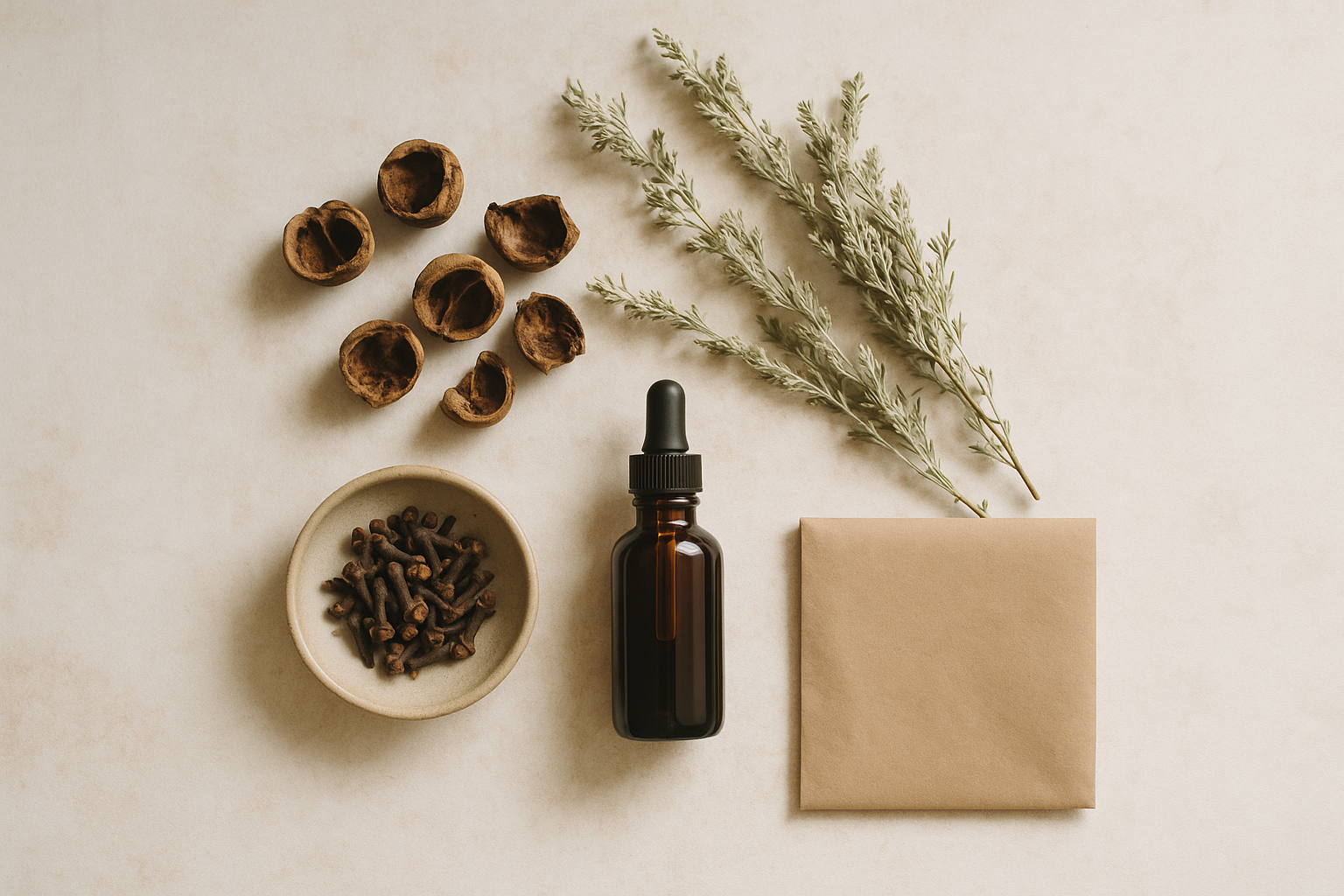
What Is an Antiparasitic Program and Where Did This Trio Come From?
The combination of black walnut, wormwood, and clove gained popularity through the work of Hulda Clark — an American naturopath who described this protocol in her book "The Cure for All Diseases" in the 1990s. The medical community is critical of her theories, but the individual plants have been studied independently, and each has its own research background.
The logic of the trio is straightforward: unripe black walnut hulls (Juglans nigra) contain juglone and tannins, thought to act on adult forms; wormwood (Artemisia absinthium) — absinthin and artabsin, traditionally associated with effects on larvae; and clove (Syzygium aromaticum) with its eugenol is considered a potential agent against eggs and cysts.
This logic — different life cycle stages — is what makes the combination appealing from a complementary standpoint. The real question is: how well does it work in practice, and when is it useful versus when is it pointless or harmful?
Three Components: What Each One Does
Black Walnut
The unripe hull of the black walnut is a source of the naphthoquinone juglone. In laboratory conditions, juglone has demonstrated anthelmintic and antifungal activity: it disrupts cellular respiration in certain protists and blocks enzymatic reactions necessary for their survival. Human studies are extremely limited, and extrapolating laboratory results directly to clinical situations is not appropriate — this is a standard caveat in evidence-based medicine.
Nevertheless, black walnut hull extract holds a consistent place in herbal medicine practice: it is used in detox programs, preventive antiparasitic regimens, and gut microbiome normalization protocols.
Wormwood
Artemisia absinthium contains sesquiterpene lactones — absinthin, artabsin, and santonin in certain Artemisia species. These compounds have historically been used against intestinal helminths long before synthetic anthelmintic drugs became available.
Modern data on wormwood are mixed. Several animal studies show effects against roundworms, opisthorchis, and giardia; high-quality randomized clinical trials in humans remain scarce. One critical detail: the gap between a therapeutic and a toxic dose is narrow. Wormwood essential oil contains thujone, which is neurotoxic at excessive doses. This is not a reason to avoid standardized extracts, but it is a strong reason to strictly follow recommended dosages and never take wormwood "by eye."
Clove
Eugenol — the primary active compound in clove — is well studied as an antiseptic and anti-inflammatory agent. In the context of antiparasitic regimens, it is used as a potential inhibitor of cyst and egg formation. In vitro data are promising: eugenol disrupts membrane integrity in certain protozoan parasites. Clove is generally tolerated better than the other two components, but at high doses it may irritate the GI mucosa.
How an Antiparasitic Program Is Structured: Standard Regimen
The classic protocol is designed for 3–5 weeks and follows a "gradual build-up" principle:
Weeks 1–2. Introduce one component at a time with a few days in between — this allows you to assess tolerability and avoids placing too much load on the liver and GI tract all at once. Typically, black walnut tincture or capsules are introduced first, then wormwood is added, and clove is added last.
Weeks 3–5. All three components are taken simultaneously at full dosage according to the specific product's instructions.
The regimen may be adjusted depending on the form of the product. Liquid tinctures (such as those based on black walnut juglone) allow for finer dose adjustment at the start. Ready-made capsule products like Stoparazit Vitauct simplify logistics: the composition and dosages are already calculated by the manufacturer.
Why 3–5 weeks? The life cycle of most intestinal helminths involves multiple stages; the minimum period of exposure that covers at least two generations is approximately 21 days. A shorter course likely produces no meaningful effect.
What else is typically added to the program:
- A sorbent or fiber (psyllium, pectin) — to bind breakdown products and remove them from the intestine. Adequate water intake — at least 1.5–2 liters per day. Moderate reduction of sugar and refined carbohydrates — sugar lowers gastric acid and creates a favorable environment for parasites.
Who May Benefit from the Program — and Who Should Not
Indications for Considering a Course
- Preventive course 1–2 times per year with exposure to animals or travel to regions endemic for helminth infections. Non-specific gut complaints after organic pathology has been ruled out: bloating, irregular stools, intermittent cramping pain. At the recommendation of an integrative practitioner as part of a comprehensive protocol.
Contraindications
This is not a "just in case" list — these are real restrictions with clinical significance.
Wormwood is contraindicated during pregnancy and breastfeeding (thujone has stimulating effects on the uterus), in epilepsy and seizure disorders (thujone is a GABA blocker), and in acute inflammatory GI conditions (high-acid gastritis, active peptic ulcer).
Black walnut contains iodine in some extracts — important to check if you have thyroid conditions, especially hyperthyroidism or autoimmune thyroiditis; verify the composition of the specific product.
Clove may potentiate the anticoagulant effect of warfarin and other medications affecting blood clotting.
General limitation: the program does not replace prescription antiparasitic medications for confirmed infections — toxocariasis, echinococcosis, opisthorchiasis, and others. These require drugs with proven efficacy and medical supervision.
Common Mistakes and Red Flags
Mistake 1: starting without any diagnosis. An antiparasitic program is not a test for "do I have parasites?" Symptoms often attributed to helminths (fatigue, skin rashes, bloating) can have dozens of other causes. Before a course, at minimum run a stool test for helminth eggs and a complete blood count checking eosinophil levels.
Mistake 2: exceeding the dose thinking more is better. With wormwood this is especially critical: the therapeutic window is narrow. Headache, disorientation, or tremor after taking it — reason to stop the course immediately.
Mistake 3: overlooking a Herxheimer-type reaction. When large numbers of parasites die rapidly, there may be a temporary release of toxins — increasing weakness, low-grade fever, and skin reactions in the first 3–7 days. This is not a sign that the treatment is "working harder," it's a signal to reduce the dose and support the elimination systems (water, sorbent).
Mistake 4: not accounting for drug interactions. Clove + anticoagulants; wormwood + antipsychotics or antiepileptic drugs — potentially significant combinations. If you take any prescription medications, consult your doctor first.
Red flag: blood in stools, sudden weight loss, pronounced weakness, or jaundice — these are not reasons to continue an herbal course; they are reasons to seek immediate medical attention.
What the Research Says
The evidence base for herbal antiparasitic protocols is uneven — that is an honest assessment. Most studies were conducted in vitro or in animal models.
According to reviews in the Journal of Ethnopharmacology, Artemisia species show anthelmintic activity against several intestinal parasite species, though high-quality randomized controlled trials in humans are insufficient to draw definitive conclusions [1].
Juglone was studied in the context of its antiprotozoal activity: papers published in Phytomedicine showed effects against Leishmania and certain yeast-like fungi [2]. Its anthelmintic potential in clinical trials remains insufficiently investigated.
Clove eugenol appears on the list of compounds with documented antiprotozoal activity in vitro according to several publications in Parasitology Research [3].
In summary: the combination has biological plausibility; the clinical evidence base is weak. That is not the same as "doesn't work," but it is not grounds for confident therapeutic claims either.
How to Choose a Form and Navigate the Product Landscape
A few practical tips for those preparing a course.
Tincture vs capsules. Liquid forms allow you to start with small doses and increase gradually — useful for people with a sensitive GI tract. Capsules are easier to use and have no pronounced bitter taste — an important factor for adherence.
Black walnut juglone in the form of an alcohol tincture or water-alcohol extract is one of the most common options for inclusion in a protocol. When choosing, look for information on concentration and standardization for juglone content.
Combination products (such as Stoparazit Vitauct) already contain several antiparasitic components in calculated ratios — a convenient option if you prefer not to assemble a regimen yourself from separate extracts.
Piperazine — this is not a herbal product but a synthetic anthelmintic with a well-established profile of action against roundworms and pinworms. It is mentioned here because it is often included in extended cleansing protocols as a more "targeted" tool when a specific type of infection has been confirmed.
FAQ
Is it necessary to run tests before a course? Preferably yes. Minimum: a stool test for helminth eggs, a blood count with differential (eosinophilia is an indirect marker of parasitic burden). This helps determine whether there are real indications and provides a baseline for evaluating results.
Can children do the course? Dosages safe for adults do not automatically transfer to children. Wormwood is generally not recommended for children under 12. Before any antiparasitic course in a child — consult a pediatrician or infectious disease specialist.
Why do some people feel worse at the start of the course? The likely cause is a reaction to the breakdown products of dying parasites or a change in the intestinal microbial environment. Reduce the dose, increase water intake, and add a sorbent if needed. If symptoms worsen — stop the course and consult a doctor.
How often should the program be done? Preventively — 1–2 times per year, typically in spring and autumn. More frequent courses without indication are not justified.
Can it be combined with probiotics? Yes, and it is a good idea: an antiparasitic course affects the microbiota. Take probiotics with a 2–3 hour interval from the herbal components to avoid reducing their effectiveness.
*This article is general reference information, not a substitute for medical consultation. If you have chronic conditions, are pregnant, or take medications — discuss the course with a specialist before starting any antiparasitic program.*
Sources
- Ferreira JFS, et al. "Artemisia species: From traditional plants to modern medicines." *Journal of Ethnopharmacology*, 2010. Xu H-X, et al. "Juglone: biological activities and potential therapeutic applications." *Phytomedicine*, 2013. Cortés-Rojas DF, et al. "Clove (Syzygium aromaticum): a precious spice." *Asian Pacific Journal of Tropical Biomedicine*, 2014.
Read more
- Peptides
Khavinson Peptides: What They Are, How They Work, and Why They're So Popular
What bioregulatory peptides are, how they work, and who should take a closer look at Ovariamin, Thyreogen, Visiluten, and Suprefort.
- Peptides
Peptide Complexes for Men 40+: Testosterone, Prostate, and Recovery
Supporting testosterone, prostate health, and recovery in men over 40: Suprefort, Glandokort, BPC-157 — who it's right for and when to avoid it.
- Peptides
Thyreogen and the Thyroid Gland: Who It's For, How to Take It, Contraindications
When Thyreogen genuinely helps thyroid function, how to take it, and which contraindications must not be ignored.
- Detox
Intermittent Fasting and Body Cleansing: What the Data Says
What the data says about intermittent fasting and body cleansing: real mechanisms, realistic expectations, and risks.
- Detox

7-Day Detox Meal Plan: A Realistic Menu from Everyday Ingredients
A realistic 7-day nutrition plan to give your body a reset: daily menus, key foods, and what to watch out for.
- Detox

Cleansing and Chronic Stress: Why Detox Doesn't Work When Cortisol Is High
Why cleansing doesn't work against a backdrop of chronic stress, and how cortisol blocks the effect of any detox protocol.
- Cleansing
21-Day Body Cleanse Program: Schedule, Foods, and Checklist
A 21-day body cleanse program: week-by-week schedule, foods to eat, a checklist, and common pitfalls.
- Cleansing
Removing Heavy Metals from the Body: What Actually Works
Removing heavy metals: what actually works (sorbents, chelators), and what is just marketing.
- Peptides
Khavinson Peptides: What They Are, How They Work, and Why They're So Popular
What bioregulatory peptides are, how they work, and who should take a closer look at Ovariamin, Thyreogen, Visiluten, and Suprefort.
- Peptides
Peptide Complexes for Men 40+: Testosterone, Prostate, and Recovery
Supporting testosterone, prostate health, and recovery in men over 40: Suprefort, Glandokort, BPC-157 — who it's right for and when to avoid it.
- Peptides
Thyreogen and the Thyroid Gland: Who It's For, How to Take It, Contraindications
When Thyreogen genuinely helps thyroid function, how to take it, and which contraindications must not be ignored.
- Detox
Intermittent Fasting and Body Cleansing: What the Data Says
What the data says about intermittent fasting and body cleansing: real mechanisms, realistic expectations, and risks.
- Detox
7-Day Detox Meal Plan: A Realistic Menu from Everyday Ingredients
A realistic 7-day nutrition plan to give your body a reset: daily menus, key foods, and what to watch out for.
- Detox
Cleansing and Chronic Stress: Why Detox Doesn't Work When Cortisol Is High
Why cleansing doesn't work against a backdrop of chronic stress, and how cortisol blocks the effect of any detox protocol.
- Cleansing
21-Day Body Cleanse Program: Schedule, Foods, and Checklist
A 21-day body cleanse program: week-by-week schedule, foods to eat, a checklist, and common pitfalls.
- Cleansing
Removing Heavy Metals from the Body: What Actually Works
Removing heavy metals: what actually works (sorbents, chelators), and what is just marketing.
- Peptides
Khavinson Peptides: What They Are, How They Work, and Why They're So Popular
What bioregulatory peptides are, how they work, and who should take a closer look at Ovariamin, Thyreogen, Visiluten, and Suprefort.
- Peptides
Peptide Complexes for Men 40+: Testosterone, Prostate, and Recovery
Supporting testosterone, prostate health, and recovery in men over 40: Suprefort, Glandokort, BPC-157 — who it's right for and when to avoid it.
- Peptides
Thyreogen and the Thyroid Gland: Who It's For, How to Take It, Contraindications
When Thyreogen genuinely helps thyroid function, how to take it, and which contraindications must not be ignored.
- Detox
Intermittent Fasting and Body Cleansing: What the Data Says
What the data says about intermittent fasting and body cleansing: real mechanisms, realistic expectations, and risks.
- Detox
7-Day Detox Meal Plan: A Realistic Menu from Everyday Ingredients
A realistic 7-day nutrition plan to give your body a reset: daily menus, key foods, and what to watch out for.
- Detox
Cleansing and Chronic Stress: Why Detox Doesn't Work When Cortisol Is High
Why cleansing doesn't work against a backdrop of chronic stress, and how cortisol blocks the effect of any detox protocol.
- Cleansing
21-Day Body Cleanse Program: Schedule, Foods, and Checklist
A 21-day body cleanse program: week-by-week schedule, foods to eat, a checklist, and common pitfalls.
- Cleansing
Removing Heavy Metals from the Body: What Actually Works
Removing heavy metals: what actually works (sorbents, chelators), and what is just marketing.